Cover ADU Builders in Fullerton: A Homeowner’s Guide
If you’re searching for Cover ADU builders in Fullerton, here’s the straight answer: Cover is one prefab manufacturer among several that serve this market, and the smarter move is hiring a builder who works with Cover alongside other brands so the recommendation matches your lot, not a sales quota. We’ll explain exactly what Cover offers, where it shines, and where another approach might serve you better. If you’d rather skip the research and talk specifics about your property, call (877) 801-4497.
Most Fullerton homeowners start their ADU search backwards. They hear a brand name, fixate on it, then hunt for someone who installs that product. But a Cover unit built on a tight lot off Commonwealth with tricky setbacks is a different animal than a Cover unit on a generous Maplewood parcel with clean access. The builder matters as much as the box.
What Cover ADUs Actually Are
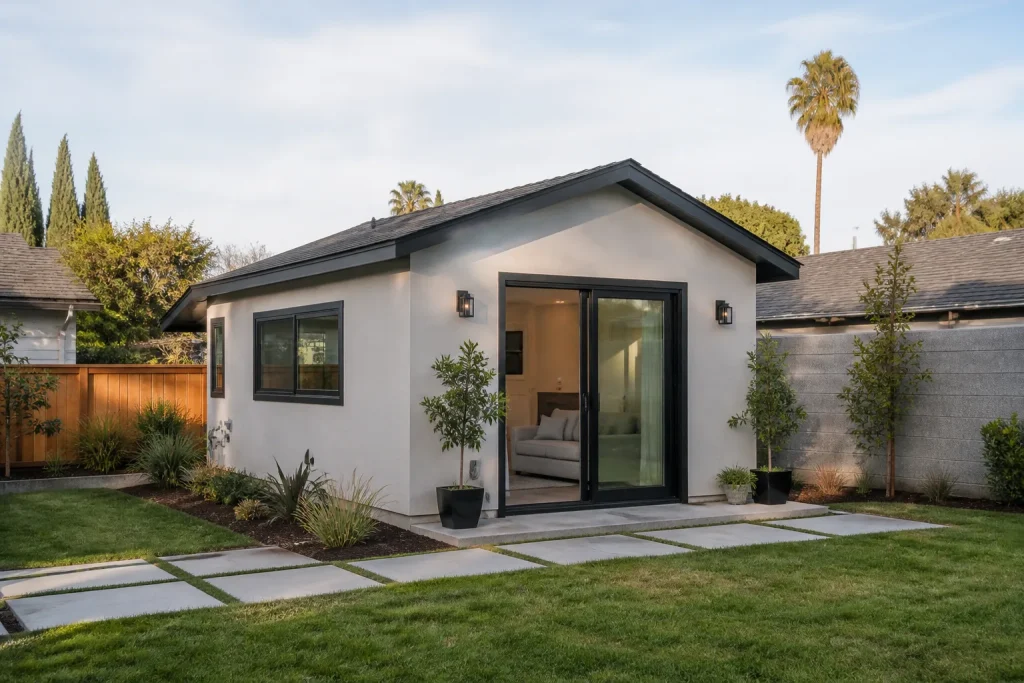
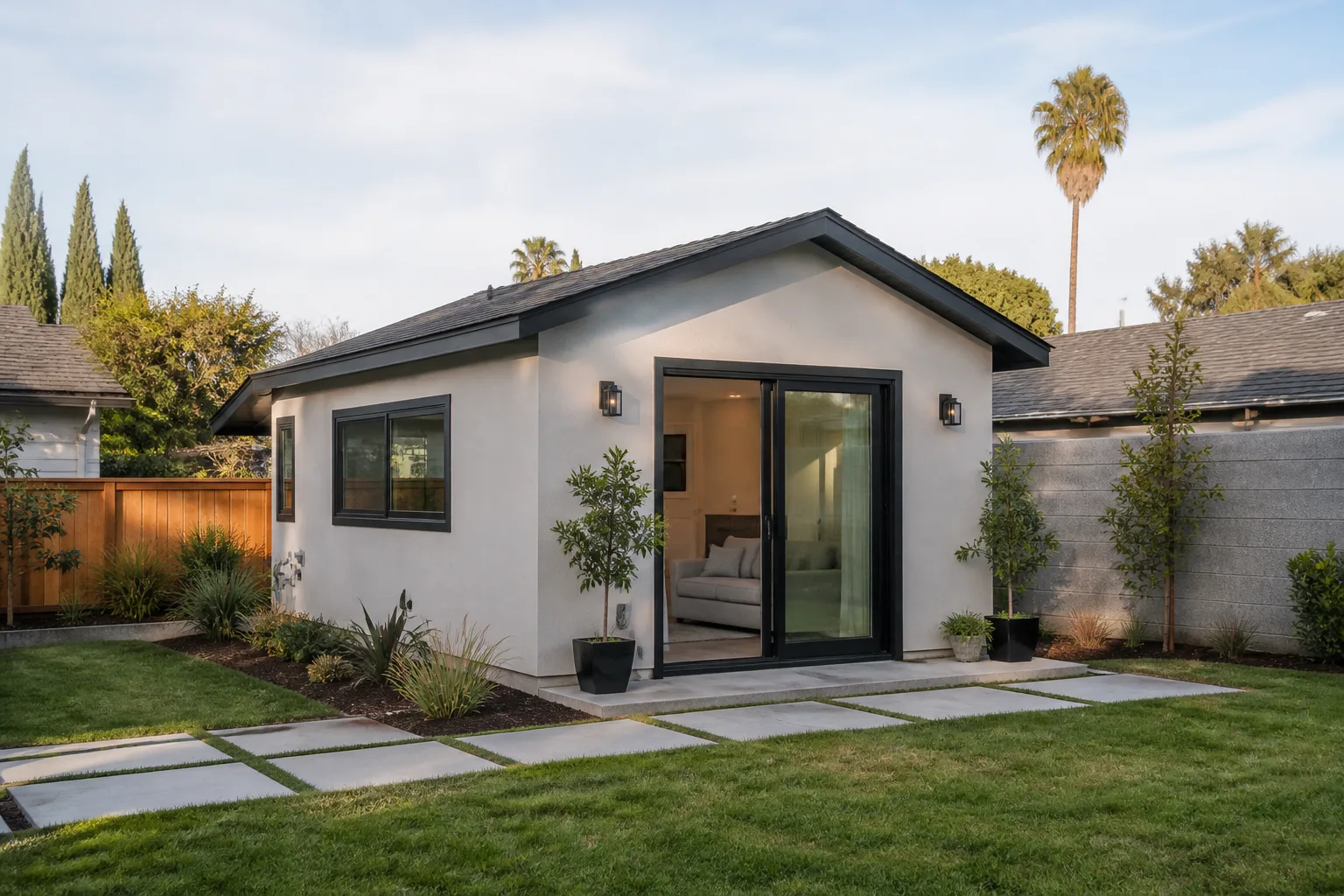
Cover is a Los Angeles-based prefab ADU manufacturer that builds panelized units in a factory and assembles them on-site. The company has earned a reputation for precision engineering, clean interior finishes, and a design language that skews modern. Units typically arrive as wall, floor, and roof panels that crews assemble over a foundation, which means the finished product looks closer to a custom build than a drop-and-set modular box.
In our experience working with homeowner-owned lots across Fullerton, Cover appeals to a specific buyer: someone who wants design integrity without the timeline drag of a conventional site build. The panels are manufactured off-site, which compresses the on-site phase significantly compared to stick framing. That said, Cover units still require foundation work, utility trenching, and finish trades like drywall and paint after assembly. It’s faster than site-built, but it’s not a same-week install.
The key distinction homeowners miss is that Cover is a product, not a builder. You can’t call Cover directly in most cases and have them construct your ADU. You hire a licensed contractor who is an authorized Cover installer, and that contractor handles permitting, site prep, foundation, utility connections, and the interior finish work. So when Fullerton homeowners search for “Cover ADU builders in Fullerton,” what they’re really looking for is a local general contractor with Cover authorization and the trade relationships to execute the full scope.
What Cover Does Well
- Design quality: Cover interiors feel intentional. The ceiling heights, window placement, and millwork details are a step above most prefab competitors.
- Precision manufacturing: Panels are cut to tight tolerances in a controlled factory environment, which reduces on-site surprises compared to stick framing.
- Speed on the assembly phase: Once the foundation is ready, panel assembly moves fast. We’ve seen Cover structures go from bare foundation to weather-tight shell in under two weeks.
- Predictable specs: Because the product is standardized, homeowners know what they’re getting before construction starts.
Where Cover Isn’t Always the Right Fit
- Site access challenges: Fullerton has plenty of lots in older neighborhoods like Raymond Hills where the backyard is only reachable through a narrow side yard. Panelized systems need crane access or significant manual handling. If a crane can’t reach the build site, you’re paying extra for logistics.
- Front-end timeline: Cover’s popularity means production slots can be booked out. If your goal is rental income by a specific date, that factory lead time matters.
- Cost flexibility: Cover units are designed as complete systems, which means less room to value-engineer down if your budget tightens. A site-built or simpler panel system can sometimes flex more on finishes.
The Builder Archetypes You’ll Meet in Fullerton
There is no single best ADU builder in Fullerton. There’s the builder whose method, manufacturer relationships, and project volume align with your specific lot, budget, and timeline. Here’s what’s actually active in this market:
1. Volume Modular Dealers
These companies move a high volume of drop-and-set modular units. They’re optimized for speed and cost certainty. If you have flat, accessible land and standard setbacks, they can deliver a functional ADU quickly. The tradeoff is design flexibility, and you’ll often be directed to one or two manufacturers they have standing purchase agreements with. That’s not dishonest, it’s just their business model. They’re selling what they know they can deliver.
2. Custom Site-Build Specialists
These are traditional general contractors who frame ADUs from the ground up. They offer maximum flexibility for odd lot shapes, hillside conditions, or aesthetic requirements from a homeowner’s association. The tradeoff is timeline, full stop. Site-built ADUs in Fullerton routinely take nine to fourteen months from permit submission to occupancy. If you’re financing with a construction loan, that’s a real cost.
3. Remodel Contractors Who Add ADUs
Fullerton has dozens of kitchen and bath remodelers who now list ADUs on their service pages. Some are genuinely competent. Many treat ADUs as a side project they’ll fit between cabinet installs. The tell is usually in their permit history. Ask how many ADU permits they’ve pulled in Fullerton specifically in the last two years. If the answer is two or three, that’s a remodeler experimenting, not an ADU contractor.
4. Brand-Agnostic ADU Firms
This is the category Fullerton ADU Builders occupies. A brand-agnostic firm maintains relationships with multiple prefab manufacturers including Cover, Abodu, Dvele, and others, and selects the product based on your lot conditions, budget, and timeline. We match the unit to the lot, not the other way around. That means if Cover is genuinely right for your project, we’ll say so, and if a simpler panel system gets you the same rental yield for less money, we’ll say that too.
For a deeper look at how this plays out in nearby canyon communities, see our guide on ADU Builders in Trabuco Canyon. Canyon-adjacent lots bring slope, access, and drainage requirements that most volume modular dealers won’t touch.
Why the Builder’s Portfolio Tells You Less Than You Think
Every ADU builder in Fullerton has a portfolio. Pretty pictures of finished units are the easiest marketing asset in this industry. What those photos rarely show is the subcontractor roster, the change-order count, the permit revision history, or the punch list that took six weeks to close out.
Here’s what we tell every homeowner to look at instead:
- Permit pull history: How many ADU permits has this builder pulled in Fullerton specifically in the last 24 months? Fullerton’s planning department has its own quirks, and builders who’ve navigated it repeatedly know where the friction points are. A builder who has done fifteen ADUs in Orange County but only one in Fullerton is still learning your city’s process on your dime.
- Subcontractor stability: Ask who does their foundation work, their electrical, their plumbing. If the builder stumbles on that question or says “we use different guys depending on the job,” that’s a red flag. Stable sub relationships are how quality gets maintained across projects. A Cover unit is only as good as the foundation crew that set the forms and the electrician who ran the service.
- Change-order frequency: Ask directly: “On your last five ADU projects, what percentage of them had change orders above five percent of the original contract?” A good builder should answer without flinching. A builder who says “we never have change orders” is either not doing real projects or not being honest.
- Warranty follow-through: Ask for the name and phone number of a homeowner whose ADU was completed more than two years ago. Then call them. Ask if anything failed and how fast the builder fixed it. That phone call tells you more than twenty portfolio photos.
We pulled a Cover project out of a tight lot off Harbor Boulevard last year where the original plan called for a traditional modular unit that simply wouldn’t fit through the side yard. The homeowner had spent three months talking to a modular dealer who kept insisting the crane would reach. It wouldn’t have. We switched the solution to a panelized system that could be hand-carried in sections, and the project closed out without a single variance request. That’s the kind of judgment call that doesn’t show up in a portfolio photo.
Two Fullerton Lot Profiles That Change Everything
Fullerton isn’t one housing market. It’s at least two, and they demand different ADU approaches.
The older residential grid: Neighborhoods like the area around Fullerton College, the streets north of Chapman, and portions of Raymond Hills were platted before the 1960s. Lots tend to be deeper than they are wide, with side yards that range from five to eight feet. Access is the dominant constraint here. It determines whether you can use a crane, whether panels need to be hand-carried, whether the foundation needs a pumper truck or can use a standard concrete chute. It also drives utility routing, because Fullerton requires trenching for new electrical service, and trenching through a narrow side yard means hand-digging around existing gas and sewer lines.
Larger mid-century parcels: Move up into neighborhoods like Sunny Hills or the streets west of Euclid, and lots open up. Side yards widen, backyards deepen, and crane access is usually feasible. Here the constraints shift from access to design. These are visible backyards. The ADU will be seen from the primary residence every day, so interior finish quality and exterior cladding matter more than raw square footage.
The point: a builder whose entire project history is tract lots in Irvine might have never dealt with a Fullerton side yard under six feet. A builder who works regularly in the older grid knows to check access before quoting anything.
What Most Builder Contracts in Fullerton Don’t Include
Here’s the coverage gap most Fullerton homeowners discover after signing. It’s not malicious. It’s just the reality of how local contracts are written.
Utility connection costs: Many contracts cover the ADU structure, foundation, and interior finishes, but treat utility connections as “owner responsibility” or “allowance item.” In Fullerton, running new electrical service from the street or from the main panel can cost several thousand dollars depending on distance, trenching conditions, and whether the existing panel has capacity. If the ADU needs a panel upgrade on the primary house, that’s sometimes a separate line item. Ask before you sign.
Landscaping and site restoration: After the foundation pour and utility trenching, your yard will look like a construction site. Some builders include a rough grade and cleanup. Almost none include landscaping restoration. If you have established trees or a lawn you care about, plan for this separately.
Permit fees and school district fees: Fullerton, like most Orange County cities, charges permit fees based on project valuation. But California also allows school districts to assess fees on new residential square footage, and those fees apply to ADUs above 500 square feet. A thorough builder will include these in your estimate. A less thorough one will leave them out and let you discover them at permit issuance.
Interior finish allowances: Some contracts quote a number with basic allowances for flooring, fixtures, and cabinetry, then hit you with upgrades once you’re in the design phase. Better contracts spell out exactly what’s included: which flooring product, which cabinet line, which fixtures. If the contract says “allowance,” ask for the allowance number in writing and what it buys at today’s prices.
Questions to Ask Before You Sign Anything
If you only take away one section from this guide, make it this one. These are the questions we recommend every Fullerton homeowner ask any ADU builder before signing:
- “How many ADU permits have you pulled in Fullerton in the last two years?” Get a specific number, not a vague “several.”
- “Which manufacturers do you work with, and why those?” If a builder only offers one prefab brand, ask why. If the answer is “because they’re the best,” that’s not an answer. The honest answer is usually about purchase volume, margin, or familiarity.
- “What’s your subcontractor roster for foundations, electrical, and plumbing?” A builder who can name the specific companies and people they work with is running an actual operation, not brokering jobs.
- “What does your contract exclude that I should expect to pay for separately?” This question often reveals the utility, landscaping, and fee gaps outlined above.
- “Can I talk to a homeowner whose ADU you finished at least two years ago?” If the answer is no, that’s information too.
For homeowners considering an ADU alongside a primary-residence upgrade, we’d note that the same trade relationships matter. The electrician who handles your ADU panel can often address issues in a bathroom remodeling project in Trabuco Canyon or nearby Fullerton neighborhoods, and coordinating those scopes through one contractor reduces scheduling friction. The same applies to kitchen remodeling in Trabuco Canyon when it makes sense to sequence both projects.
The Bottom Line
Cover makes a genuinely good product. If your Fullerton lot has clean access, your budget supports a design-forward unit, and your timeline allows for their production queue, Cover is worth serious consideration. But the builder you choose matters more than the brand on the panel. A great product installed by a builder with no Fullerton permit history and unstable subcontractors will underperform a simpler product installed by a builder who navigates this city’s process weekly.
Approach builder selection as a matching problem, not a shopping problem. Define your lot constraints first. Get specific about your timeline. Be honest about your budget ceiling. Then find the builder whose method and manufacturer relationships map to those realities.
If you’re in Fullerton and want help working through the options, Fullerton ADU Builders home is a good place to start. We’ll give you a straight read on whether Cover or another approach fits your lot. Call (877) 801-4497 for a free estimate.
Frequently Asked Questions
A Cover ADU in Fullerton typically lands in the $300,000 to $450,000 range for a completed one-bedroom unit, including foundation, utility connections, and finishes, though site conditions and access constraints can push costs higher. The actual price depends heavily on foundation type, trenching distance, and whether your lot requires a crane or manual panel handling. Call (877) 801-4497 for an exact quote on your specific lot.
Expect eight to fourteen months from contract signing to move-in, depending on Cover’s production queue, Fullerton permit review times, and site access complexity. The on-site assembly phase is fast once the foundation is ready, but the front-end work including permits, foundation, and utilities typically consumes most of the timeline.
No. We’re brand-agnostic and work with multiple prefab manufacturers including Cover, Abodu, Dvele, and others. The recommendation depends on your lot access, budget, timeline, and design goals, not on a preferred vendor relationship. We match the unit to the lot.
Neither is categorically better. Prefab units like Cover offer design consistency, shorter on-site assembly, and fewer weather delays. Site-built ADUs offer more flexibility for odd lot shapes and design customization. The right choice depends on your specific property. Call (877) 801-4497 and we’ll tell you straight which path fits your situation.
Written by the team at Fullerton ADU Builders, serving Fullerton since 2017.
Need ADU Help?
Call Fullerton ADU Builders — licensed & insured, here with fast after-hours help in Fullerton.
(877) 801-4497