
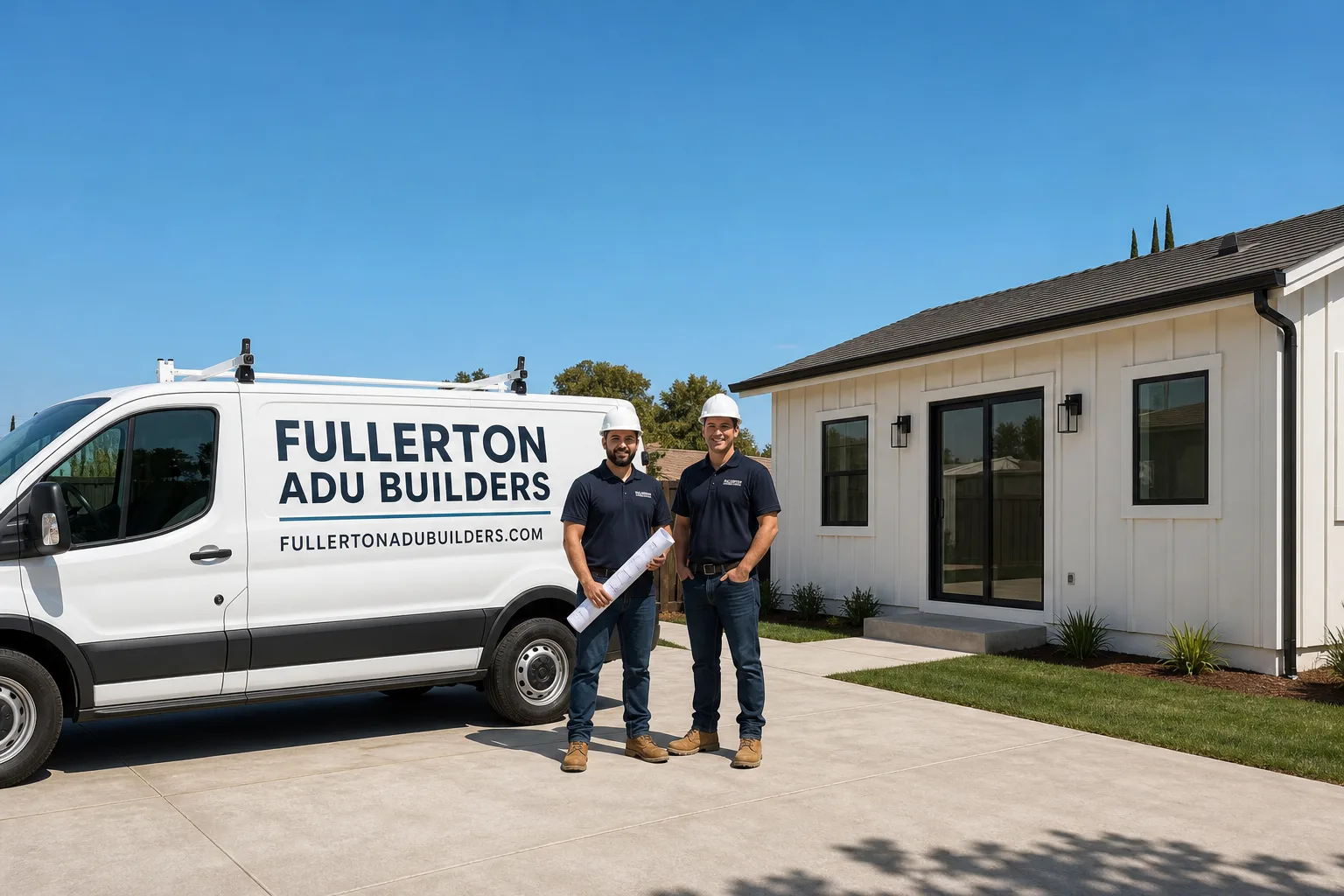
Fast, Reliable ADU Builders Across Piñon Hills
Most ADU projects in Piñon Hills hinge on one document that has nothing to do with framing or drywall: the county health department’s water-supply and septic approval. That review, not the building plan check, is what actually sets the timeline on a detached guest house or garage conversion here. We’ve worked enough parcels across ZIP 92372 to know the sequence cold. If you’re planning an ADU on a private well and septic, call (877) 801-4497 and we’ll map the approval path before you spend a dollar on design.
Why Fullerton ADU Builders Is Piñon Hills’s Preferred ADU Builders Company
Homeowners in Piñon Hills call us because we don’t pretend the permitting process here looks like it does in Fullerton or Phelan. The county’s water-supply capacity review for a second dwelling on a private well routinely takes longer than plan check, and the septic approval can stall a finished shell for months if nobody flagged it early. We sequence the health-department work first, so the foundation pour and framing don’t outrun the paperwork. Glen Pacheco built Fullerton ADU Builders around that kind of sequencing: know the county’s rules before you draw, then match the method to the lot.
Our ADU Builders team works in both prefab and site-built delivery, so a tight dirt lane off El Centro Road doesn’t force you into one construction method. We’ve specified factory-built units where crane access was workable and site-built additions where the county’s septic field layout dictated the ADU’s footprint more than any design preference did. Homeowners around Piñon Hills appreciate that we’re brand-agnostic: the lot, well capacity, and septic envelope decide the recommendation, not a manufacturer’s incentive program.
ADU Design in Piñon Hills
ADU Design in Piñon Hills starts with the septic system, not the floor plan. On a multi-acre lot where the leach field already serves a 1970s ranch house, the county may approve only a certain number of additional bedrooms or plumbing fixtures, and that number shapes the unit’s size before an architect sketches a wall. We’ve seen owners fall in love with a two-bedroom plan only to learn their existing septic system caps them at a studio or one-bedroom unless they expand the system. On a 4,000-plus foot high-desert site with freeze-thaw cycles and intense summer sun, the design also has to account for pipe runs that stay below frost line and a well house that won’t freeze in January.
The design phase matters because a Piñon Hills ADU is almost always a detached structure, which means its own foundation, its own utility trenching, and its own exposure to wind-driven snow on the north slope of the San Gabriels. A typical detached ADU design package in Piñon Hills, including site evaluation, septic and water feasibility, and buildable plans, runs $6,000 – $14,000 depending on whether you go prefab-adapted or fully custom site-built. That figure assumes the county health department’s preliminary review is included, which it should be from day one.
Septic-first floor-plan sequencing
We won’t sell you a floor plan that fights your septic system. The county’s health department reviews existing system capacity and the proposed wastewater load before the building department looks at walls. If the existing leach field can’t handle a second dwelling, you’re expanding it or changing the unit size. That decision comes first.
Freeze-aware plumbing design
Winter lows in Piñon Hills regularly dip into the teens, and snowmelt can saturate soil around shallow pipes. Our design work places all water lines below the local frost depth and specifies insulated enclosures for well heads and pressure tanks. That’s standard practice for a high-desert ADU, but it’s routinely skipped by builders who learned their trade at sea level.
Backyard ADU in Piñon Hills
Backyard ADU construction in Piñon Hills almost never means a suburban slab behind a tract home. It means a detached guest house on a 1-to-5-acre parcel, often tucked behind an existing shop, garage, or outbuilding, with its own trench run from the well and its own path to the septic tank. The county approval for that second dwelling hinges on water-supply capacity and wastewater, which is why we treat a Backyard ADU here as a site-development project first and a building project second. A typical detached backyard ADU in Piñon Hills runs $180,000 – $320,000 for a site-built one-bedroom to two-bedroom unit, assuming no major septic expansion; converting an existing detached garage into an ADU runs $120,000 – $220,000 depending on how much of the original shell and slab is salvageable.
Those numbers reflect the high-desert site conditions: longer trench runs, freeze-protected plumbing, and exterior materials that hold up to snowmelt and intense UV. Cheap coastal-spec hardware fails fast at 4,000 feet. We’ll get into what we specify instead below.
Garage and shop conversions
Most Piñon Hills properties already have a detached garage, shop, or outbuilding, and owners correctly see it as the fastest path to a rentable unit. The catch is usually the plumbing: a garage slab built in 1985 wasn’t plumbed for a bathroom or kitchen, and tying it into an existing septic system triggers the same health-department review as a new build. We handle the conversion as a full ADU project, not a remodel, because the county treats it that way.
Detached new builds on acreage
On a larger parcel with room to place the unit away from the primary home, a new detached ADU gives you control over slab height, solar orientation, and trench routing from the well. We’ve placed units where the summer sun hits the southwest wall hard, specifying shading and thermal mass that keep cooling costs sane without an oversized HVAC system. The lot dictates the placement; the county dictates the wastewater envelope.
Trusted Brands We Service in Piñon Hills
We work directly with seven established prefab manufacturers, including Abodu, Cover, and Dvele, and we specify James Hardie fiber cement cladding on both prefab and site-built exteriors in Piñon Hills. That cladding choice matters at 4,000 feet: it shrugs off snow load, doesn’t warp in the dry summer heat, and holds paint longer than wood or engineered wood siding in high-UV conditions. Because we stock common replacement parts and touch-up materials for the prefab brands we install, a warranty item or post-install adjustment on a Piñon Hills unit doesn’t mean waiting on a shipment from a factory in Texas or Northern California. For our site-built work, we order James Hardie in the specific colors and profiles the high-desert light calls for, which keeps the exterior looking right from the day it’s installed through a decade of snow, sun, and wind.
Common ADU Builders Problems We See in Piñon Hills Homes
- Cheap galvanized fasteners and untreated fence posts failing at the property line. Winter snowmelt and summer sun cycles in Piñon Hills corrode builder-grade hardware fast. We re-specify hot-dip galvanized and stainless structural hardware, marine-grade sealed window frames, and sealed paver joints on every job. The budget spec costs more to redo within a decade.
- Treating the ADU as a building-permit job and forgetting the county health department. The private-well water-supply capacity review and septic approval routinely run longer than the building plan check. We’ve seen finished shells sit empty for months because nobody sequenced the environmental health paperwork first.
- Reusing a detached garage or shop with plumbing that can’t handle a Piñon Hills winter. Pipes run in mild-climate fashion freeze and burst in the teens. Well houses with no insulation leave pressure tanks exposed to January lows. We design for freeze from the first site visit.
- Designing the ADU footprint without checking the existing leach field. A two-bedroom plan means nothing if the current septic system caps the additional wastewater load. We pull the county’s records on your existing system before we draw anything, so the unit size matches what your land can actually support.
Pricing for ADU Builders in Piñon Hills, CA
On a Piñon Hills parcel, the price of a site-built detached ADU lands between $180,000 and $320,000. A garage or shop conversion runs $120,000 – $220,000. A prefab studio or one-bedroom, factory-built and craned onto a prepared foundation, runs $140,000 – $240,000 installed, depending on the manufacturer and how much site work your lot requires. What moves the number most is septic: if the county health department requires a leach field expansion or a new tank, add $20,000 – $45,000 before you talk about finishes. If the well needs a new pump or storage tank to serve two dwellings, add $8,000 – $18,000. These are the real cost drivers in Piñon Hills, not flooring upgrades. Call (877) 801-4497 for a line-item estimate built from your parcel’s actual conditions, not a template.
We Also Serve Cities Near Piñon Hills
We work with homeowners across the high desert and mountain communities around Piñon Hills, including Phelan, Wrightwood, Oak Hills, and Adelanto. Each has its own water-district or well-and-septic profile, and the county approval sequence changes accordingly. If you’re on a private well in any of these communities, the same early health-department sequencing applies, and we’ll handle it the same way.
Serving Piñon Hills, CA — Our Local Coverage Area
We’re based in the Piñon Hills area and know this community well. Use the map below to see our service coverage — if you’re nearby, we can almost certainly help.
FAQs About ADU Builders in Piñon Hills
Because most of ZIP 92372 sits outside any public water or sewer district, the county health department must verify that your private well can supply a second dwelling and that your septic system can absorb the additional wastewater load. That review sets the size, bedroom count, and viable footprint of your ADU before an architect or designer commits a single wall. It’s the longest pole in most Piñon Hills projects. Call (877) 801-4497 and we’ll pull the county records on your existing system before any design work begins.
Yes. At roughly 4,000-plus feet on the north slope of the San Gabriels, Piñon Hills sees freeze-thaw cycles, snowmelt, and intense summer UV that coastal builds never face. Cheap galvanized fasteners rust at the property line, untreated wood posts rot where snowmelt pools, and builder-grade window frames leak after a few high-desert winters. We specify hot-dip galvanized and stainless hardware, marine-grade sealed window frames, and James Hardie fiber cement cladding. The coastal-spec version costs less up front and more within a decade. Call (877) 801-4497 for a materials breakdown on your specific parcel.
Usually yes, but the county treats it as a new dwelling, not a remodel. Your garage slab likely has no plumbing for a bath or kitchen, and tying new fixtures into the existing septic system triggers the same health-department review as a new build. We evaluate the existing shell, slab, and septic capacity together, then tell you whether the conversion pencils out against a new detached unit. Call (877) 801-4497 and we’ll assess your existing structure on the first visit.
We place all water lines below the local frost depth, insulate the well house and any exposed pressure tank, and slope all runs so water drains back instead of freezing in a low spot. We also specify freeze-resistant exterior hose bibs and heat-tape accessible points where the county allows. Piñon Hills winter lows in the teens make this standard, not optional. Call (877) 801-4497 and we’ll inspect your existing well-house setup before the first trench is cut.
Yes. If the county’s water-supply capacity review shows your well can’t support a full second bathroom, we reduce fixture count or add a storage tank. If the septic review caps the added bedroom count at one, we design a one-bedroom unit instead of a two-bedroom. The county’s envelope dictates the unit, not the other way around. This is the core difference between a Piñon Hills-savvy builder and one who files the building permit and hopes for the best. Call (877) 801-4497 for a free estimate that starts with the health-department reality, not a floor plan drawn in a vacuum.
Written by Glen Pacheco, Owner at Fullerton ADU Builders, serving the high desert and mountain communities of Southern California.