ADU Company in Chino, CA
Kitchen remodeling in Chino usually means reworking a 1980s-2000s Mediterranean or Spanish-style tract home where the original footprint, plumbing stub-outs, and window placements were locked in decades before anyone thought about open floor plans or oversized islands. The tile roofs and stucco exteriors hold up fine, but the kitchens inside them wear their age in delaminated cabinet boxes, tired fluorescent soffits, and layouts that close the cook off from everyone else. Fullerton ADU Builders handles those remodels as a focused kitchen contractor, and we also build ADUs and remodel bathrooms for Chino homeowners who want one accountable team across the whole property. Call (877) 801-4497 to talk through your project and get a free estimate.
Why Chino Homes Are Different
Chino’s housing stock is overwhelmingly 1980s-2000s tract construction: stucco on wood frame, tile roofs, attached two- and three-car garages, block-wall backyard fencing, and lots that were graded flat and planted with mature trees that now shade patios and rear corners. Those homes were built for single-family living, which means the utility runs, panel capacity, and interior framing assume one kitchen, two or three bathrooms, and no second dwelling. The work we do in the 91708 and 91710 ZIP codes is shaped by that reality. A kitchen remodel here frequently means tying into original copper supply lines and cast-iron or ABS drain stacks that have been in the slab since the Reagan administration. An ADU means extending sewer, gas, and electrical across a backyard that has already been paved or landscaped, and squeezing the structure between the rear block wall and the required setback while keeping the lateral’s slope. Chino’s hot, dry summers and Santa Ana wind events also push every project toward deep roof overhangs, high-efficiency mini-split cooling, and ember-resistant exterior detailing, especially on lots near the Chino Hills-adjacent wildland edges. We plan for those conditions from the first site visit, not after the permit is pulled.
Our Main Chino Services
Chino homeowners call us most often about two projects: building an ADU and remodeling a bathroom. Here’s what each one involves in this city, with a direct path to the dedicated Chino page for the service.
ADU Builders in Chino
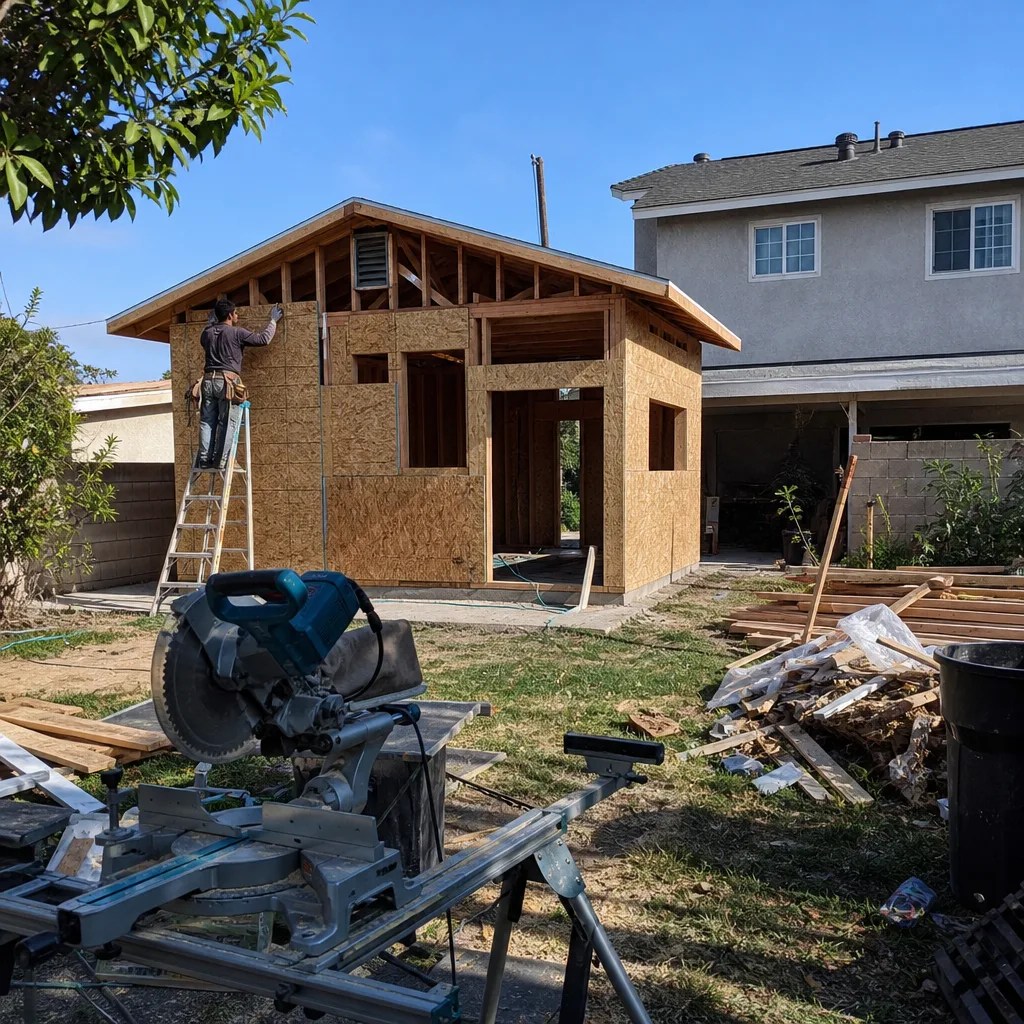
Most Chino ADU work starts in the garage. The attached two- or three-car garages on these tract homes convert well because the slab, framing, and roof are already there, and the electrical panel is usually in the garage wall or close to it. Detached new-build ADUs on rear lots are the other path, and in Chino those almost always require extending sewer and gas lines across a backyard that’s already landscaped, plus navigating the tight rear setback against the block wall. Fullerton ADU Builders has served Chino since 2017 and matches each homeowner to the right delivery method, prefab or site-built, based on lot geometry, budget, and timeline. ADU Builders in Chino has the full breakdown.
Bathroom Remodeling in Chino
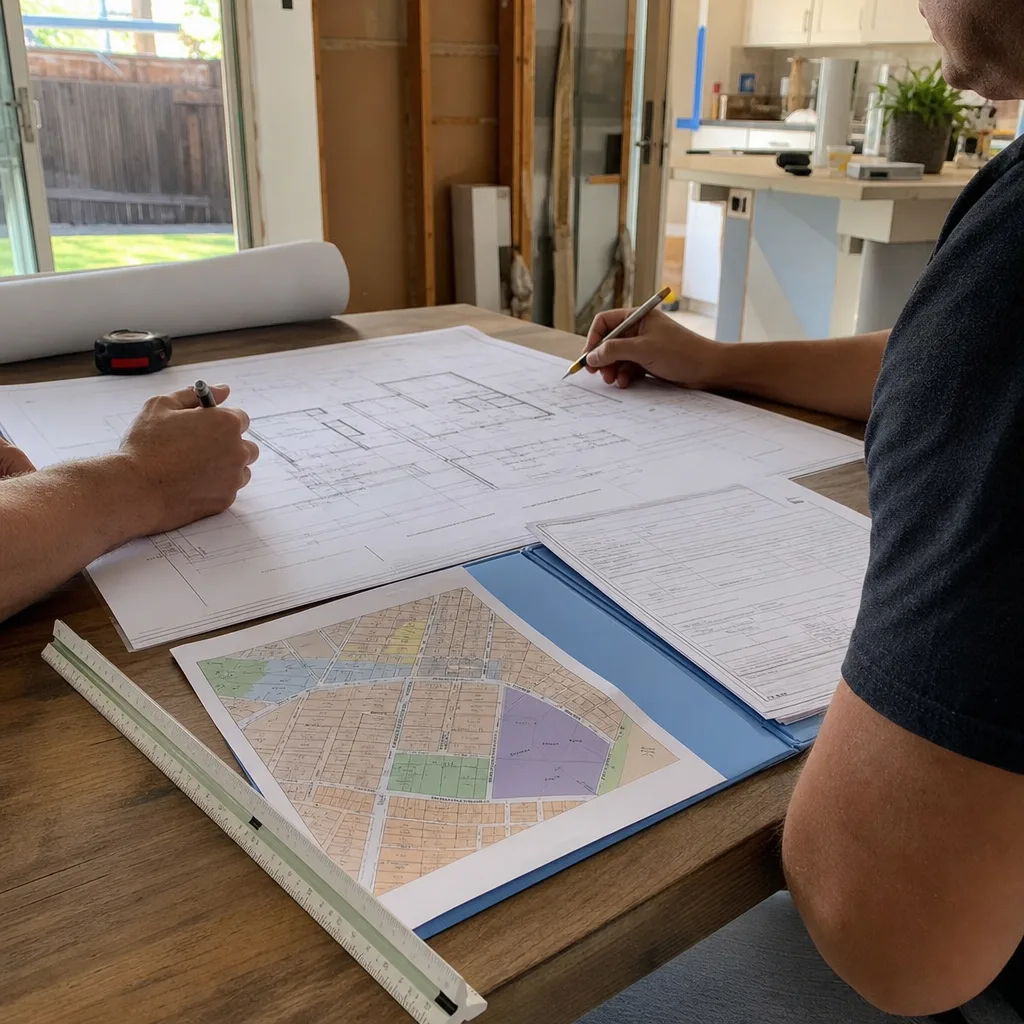
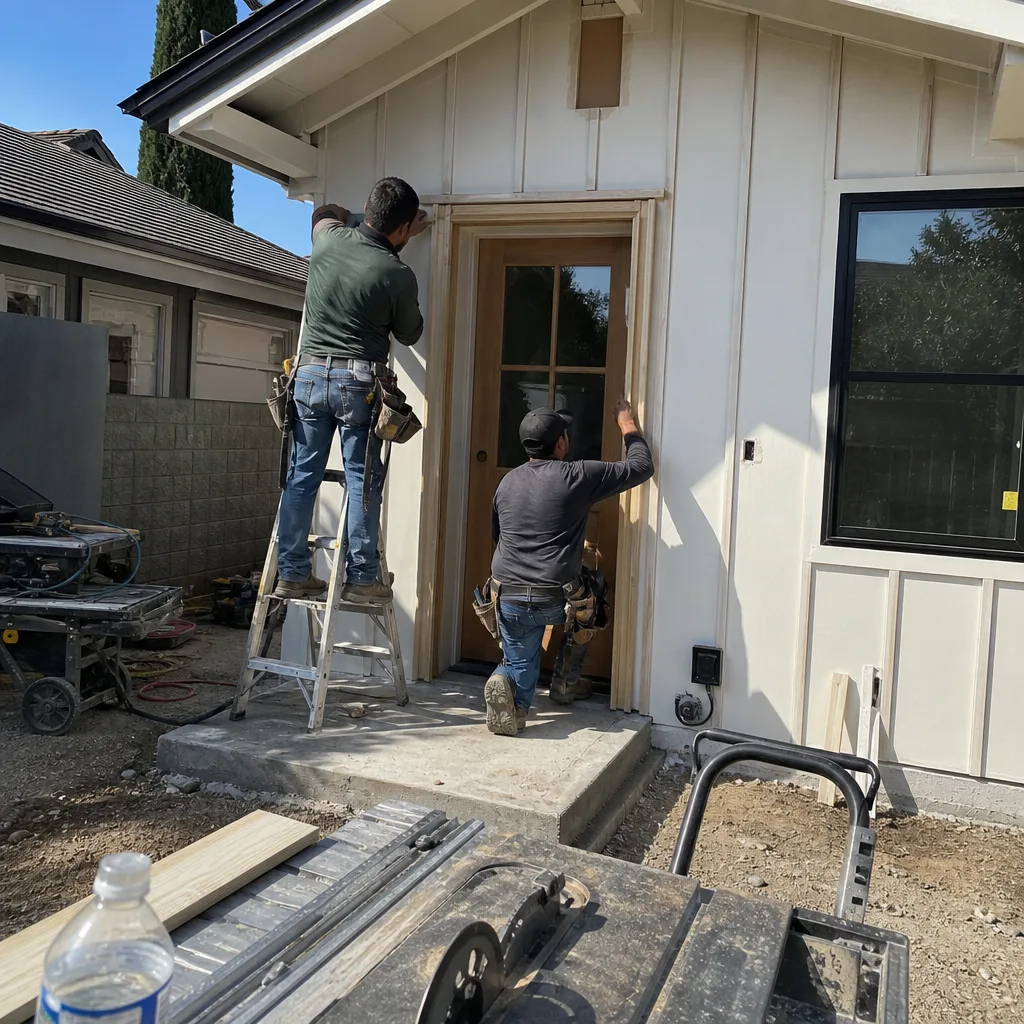
Bathrooms in these 1980s-2000s Chino tract homes share a set of problems: original cast-iron tubs and shower pans, small window openings, dated tile, and vanities that predate modern storage needs. The work here often means removing a fiberglass tub surround, re-floating walls that have decades of paint and texture on them, and correcting ventilation that was never adequate for a windowless interior bath. We treat Chino bathroom remodels as a full-service job: demo, plumbing, waterproofing, tile, fixtures, and finish, with James Hardie cement board in wet areas as our standard substrate. See Bathroom Remodeling in Chino for the complete scope and local pricing notes.
What happens when you call
- 1
A real person answersNo phone trees — you reach a local pro.
- 2
You get an upfront price rangeHonest numbers before anyone is dispatched.
- 3
A background-checked tech heads outLicensed & insured, dispatched right away.
- 4
You approve before work beginsNothing starts until you say go.
Kitchen Remodeling in Chino
Chino kitchen remodels are usually about solving a structural mismatch: homes built between 1980 and 2010 were framed for compartmentalized kitchens, and today’s homeowners want a working kitchen that opens to the family room, holds a large island, and carries a full appliance package without tripping breakers or crowding the walkway. In these stucco tract homes, that often means removing a load-bearing wall between the kitchen and family room, relocating plumbing and gas for an island sink or range, and upgrading the electrical panel to handle modern appliance loads. We do all of that as a single licensed contractor, and we also build ADUs and remodel bathrooms for the same clients, so the kitchen work is never planned in isolation from the rest of the property. If you want to see how a Chino kitchen remodel fits into a larger property plan, start with Kitchen Remodeling and then call us for a site visit.
Load-Bearing Wall Removal
Signs you need it
Your Chino kitchen feels closed off from the family room, and the wall between them runs perpendicular to the ceiling joists or sits directly above a foundation beam.
What it costs in Chino
Removing a load-bearing wall in a Chino tract home and installing a flush LVL beam typically runs $5,000-$10,000 depending on the span, the point loads, and the foundation work required at each end.
How we do it
We call a structural engineer for the beam calculation and permit drawings, shore the ceiling with temporary walls, demo the partition, set the new LVL, and tie the point loads down to the foundation per Chino’s current code.
Cabinet Replacement
Signs you need it
Your cabinet boxes are delaminating at the sink base, the drawer slides are failing, or the faces are worn past any paint-grade fix.
What it costs in Chino
New semi-custom cabinets with soft-close hardware and full-depth uppers for a standard Chino galley or L-shaped kitchen run $15,000-$30,000 installed, not including counters.
How we do it
We field-measure the existing footprint, order the cabinet run, strip the old boxes down to the studs, correct any framing issues, and install the new cabinets on a level base before the counter template is cut.
Countertop Replacement
Signs you need it
The existing tile counters have cracked grout and chipped edges, or the laminate is peeling at the sink and seams.
What it costs in Chino
Quartz or granite counters for a typical 30-square-foot Chino kitchen run $3,000-$6,000 fabricated and installed, including the sink cutout and a standard backsplash.
How we do it
After the cabinets are set, our stone fabricator templates the run with a laser, cuts the slab off-site, and installs the counters with mechanical fasteners, then we set the sink and reconnect the plumbing.
What Kitchen Remodeling Costs in Chino
| Item | Typical range in Chino |
|---|---|
| Load-bearing wall removal with LVL beam | $5,000-$10,000 |
| Semi-custom cabinet package, installed | $15,000-$30,000 |
| Quartz or granite countertops, 30 sq ft | $3,000-$6,000 |
The spread exists because two Chino kitchens built in the same decade can sit on very different foundations: some have slab-on-grade that makes moving a drain line expensive, others have raised floors with a crawl space that makes the same move straightforward. We give every homeowner a written line-item quote before work starts, and the price on that quote is the price you pay, no change orders on our own scope.
How much does a kitchen remodel cost in Chino?
A full kitchen remodel in Chino typically lands between $25,000 and $50,000, depending on whether walls move, plumbing relocates, and the appliance package changes. Call (877) 801-4497 for an exact quote, estimates are free.
Will my Chino kitchen remodel require a permit?
Yes, any work that touches framing, electrical, plumbing, or gas requires a city of Chino building permit, and we pull all of them as the contractor of record. Inspections get scheduled through the city and must pass before we close the walls.
Brands We Service in Chino
We work across the prefab and exterior product spectrum so Chino homeowners get the right unit for their lot, not the only unit a builder happens to sell. That includes units from Tuff Shed, Abodu, and Cover, with James Hardie fiber cement specified as our standard exterior cladding for fire and moisture resistance in this climate. See our brands for the full list and typical turnaround times.
Pricing for ADU Company in Chino, CA
| Service | Typical range in Chino |
|---|---|
| Kitchen load-bearing wall removal with LVL | $5,000-$10,000 |
| Kitchen cabinet replacement | $15,000-$30,000 |
| Kitchen countertop replacement | $3,000-$6,000 |
| Full kitchen remodel | $25,000-$50,000 |
| ADU garage conversion | $80,000-$150,000 |
| ADU new construction above garage | $200,000-$350,000 |
| ADU new construction backyard cottage | $150,000-$250,000 |
| ADU garage conversion above 450 sq ft | $150,000-$280,000 |
| Bathroom remodel | $15,000-$30,000 |
| Bathroom remodel above 100 sq ft | $25,000-$50,000 |
| Primary bath remodel | $25,000-$50,000 |
| Prefab ADU 2 bedroom turnkey | $250,000-$350,000 |
In Chino, the two big price movers are utility extension distance and slab work. Running a sewer lateral across a fully landscaped 60-foot backyard and cutting into existing concrete costs more than the same line on a dirt lot, and the difference is real money. Every one of our quotes is a written, line-item, fixed price, and we walk you through what is driving the number before you sign anything.
Neighborhoods We Serve in Chino
We work across Chino and the immediate area, including the tract-home neighborhoods built from the 1980s through the 2000s where most of our kitchen, bath, and ADU projects land. We quote and schedule work all over the city:
- The Preserve
- College Park
- Chino Hills-adjacent neighborhoods
- Central Chino historic grid
- Southeast Chino tract subdivisions
For most Chino projects we can have a site lead out within a few business days of your initial call, depending on the current schedule.
Service Area – Cities Near Chino
Fullerton ADU Builders serves Chino and the surrounding Inland Empire and east edge of Los Angeles County. Homeowners in nearby cities with similar tract-home stock and lot geometry call us for the same kitchen, bath, and ADU work, including Los Serranos, CA, Ontario, CA, Montclair, CA, and Eastvale, CA.
Serving Chino, CA — Our Local Coverage Area
We’re based in the Chino area and know this community well. Use the map below to see our service coverage — if you’re nearby, we can almost certainly help.
FAQs About ADU Company in Chino
Most Chino homeowners get a site visit scheduled within a few business days of calling (877) 801-4497. The Preserve and southeast Chino tend to fill our schedule quickly, so call early in the week when you have more flexibility.
We pull all city of Chino building permits as the contractor of record and coordinate the inspections. HOA approval, if your Chino subdivision has one, is the homeowner’s responsibility, but we provide the drawings and spec sheets your HOA will ask for.
Yes, and doing both under one contractor saves on mobilization, dumpster fees, and coordination time. We phase the work so the primary residence stays liveable during construction, and we run one written quote for the full scope so there are no surprises between the two projects.
What happens when you call
- 1A real person answersNo phone trees — talk to a local adu pro.
- 2You get an upfront price rangeHonest numbers before anyone is dispatched. No surprises.
- 3We come out and measureLicensed & insured, at a time that suits you — the visit and the quote are both free.
- 4You get the price in writingLine-itemed, yours to keep, and nothing starts until you say go.
What Chino Customers Say
"The kitchenette layout he suggested made better use of the space than the one on our original sketch."
— Marisol Guzman"Unit came out great and the tenant is happy. The timeline ran long, largely because of how slow the city was on plan check, though a couple of the delays were scheduling on their end."
— Greg Reed"Detached unit in the back yard. Utilities trenched, separate meter, and it passed final on the first inspection."
— Erin Ziegler